
About the New Castle County Register of Wills
The New Castle County Register of Wills is the office that handles estate administration. It helps people work through the steps tied to a death in the family. That work covers wills, intestate estates, small estates, short certificates, inventories, and accountings. The office is part of New Castle County government and is not the same as the Superior Court Prothonotary, which is the civil clerk for trial court files.
Delaware probate is split. The Register of Wills runs the day-to-day filings. The Court of Chancery hears contested estate matters, will contests, trust fights, and many guardianship cases. Most simple estates never see Chancery. Most contested estates do.
New Castle County Register of Wills
800 North French Street
Wilmington, DE 19801
Hours and direct numbers are posted at newcastlede.gov/Register-of-Wills.
What the Register of Wills Does
The job is focused on estates and probate paperwork. Staff cannot give legal advice. They can show you which form to use and what a form needs. They take filings, charge fees, and stamp certified copies when asked. The list below covers the main tasks.
- Accept a will for safekeeping or for probate after death.
- Open an estate and appoint a personal representative.
- Issue short certificates for asset transfers.
- Hold inventories, accountings, and estate ledgers.
- Process small estate filings and renunciations.
- Take bonds, oaths, and notice forms tied to estates.
- Close estates after final accounting and approval.
Many estates are handled without a lawyer. The forms are written for the public. Hard estates, like ones with out-of-state real estate, minor heirs, missing wills, or family fights, are best handled with counsel.
Probate Forms and Filings
New Castle County keeps its probate forms online at the probate forms page. Forms are grouped by task. You pick the form that matches the step you are on. Opening an estate uses one set. Filing an inventory uses another. Closing an estate uses a final-accounting form. Each form lists what to attach and where to sign.
The lead-in to the probate forms page shows how the county arranges its estate paperwork.
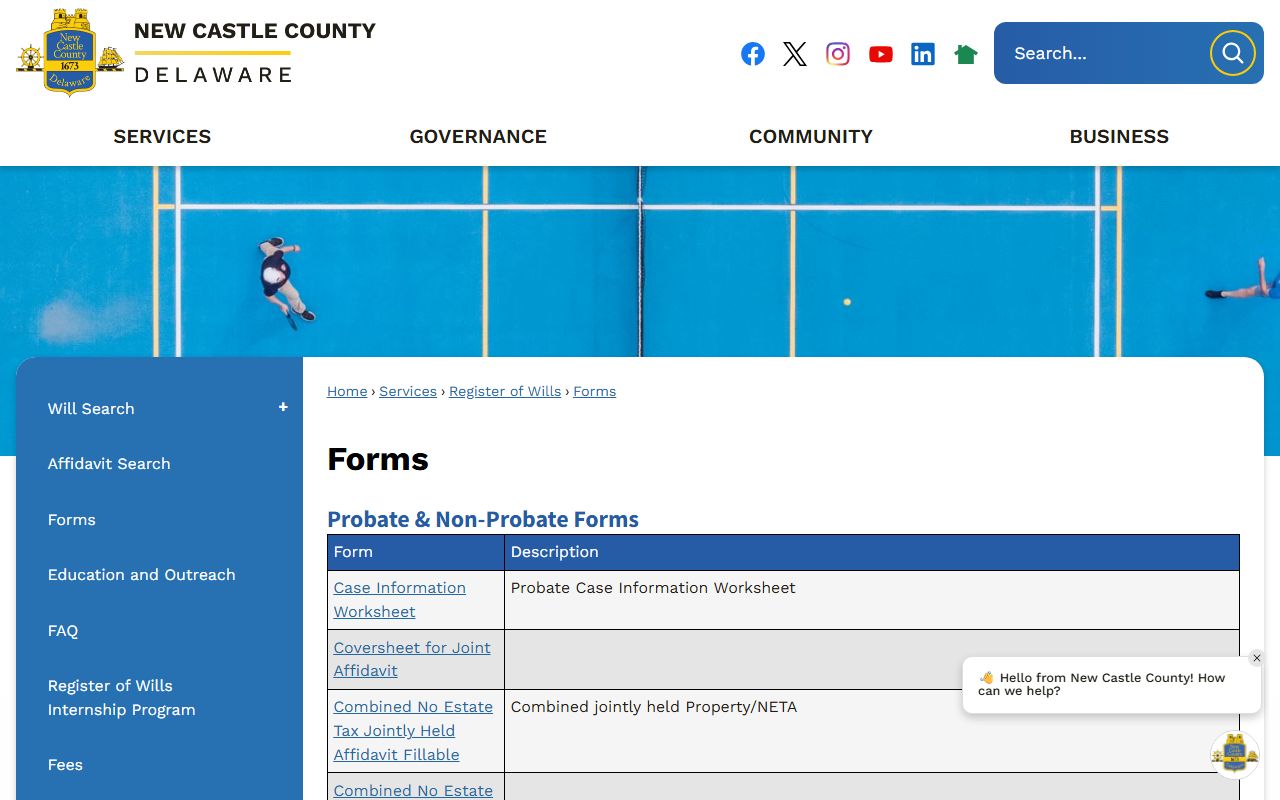
The forms page shows that probate is a series of small filings, not one big petition. Skipping a step can stall an estate for months. Read the form notes before you sign and pay.
How to Request a Certified Copy or Short Certificate
Most banks, brokerages, insurers, and title agents want a short certificate, not a plain copy. A short certificate is a small certified record that shows who the personal representative is. It is the key that lets the executor act on the estate. The Register of Wills prints and stamps these.
- Find the estate file. Use the decedent's full name and date of death. If you already have an estate number, use that.
- Pick the type of copy. Short certificate for asset transfer, certified will copy for proof of the will, or certified inventory/accounting for records.
- Fill out a written request. State the file number, your name, and how you are tied to the estate.
- Bring or send the fee. Use the current Register of Wills fee schedule for the exact amount.
- Pick up in person or have the copies mailed. Mail jobs take longer; plan ahead for bank deadlines.
Note: A short certificate is needed for most asset transfers; a plain copy of the will is rarely enough on its own.
Probate Request Form Fields
The fields below match a typical probate copy request or estate search. They are also close to what the office uses on the petition to open an estate. Use the named county forms as your guide; field names can shift by PDF.
| Field | Required | Notes |
|---|---|---|
| Decedent Name | Yes | Full legal name of the person who died. |
| Date of Death | Yes | Used to find the estate and set probate timing. |
| Estate Number | No | Useful when the office has already opened a file. |
| Petitioner / Personal Representative | Yes for new estates | Name, address, phone, and tie to the decedent. |
| Heirs and Beneficiaries | Yes for new estates | Names, addresses, and shares as known. |
| Assets and Estate Value | Yes for new estates | Used for fees, small-estate test, and inventory. |
| Copy Type | Yes for copy jobs | Plain, certified, short certificate, or exemplified. |
| Number of Copies | Yes for copy jobs | Each certified copy carries its own fee. |
| Requester Contact | Yes | Address, phone, or email for pickup or mail. |
| Notary / Oath | Often yes | Probate filings often need a sworn signature. |
Register of Wills Fees
Exact fees are set by Delaware law and the county Register of Wills fee schedule. Filing fees often scale with the estate value. Copy fees are charged per page, with an added stamp fee for certified copies. The list below shows the fee types you will run into, not invented amounts. Check the current schedule on the county Register of Wills page before sending payment.
| Item | Notes |
|---|---|
| Estate opening fee | Often scaled by estate value tier. |
| Small estate filing | Lower fee for estates that qualify under Delaware small estate rules. |
| Short certificate | Per-copy fee for the certified extract used for asset transfer. |
| Certified will copy | Per-page rate plus a certification stamp fee. |
| Plain copy per page | Per-page rate for uncertified prints. |
| Inventory and accounting filings | Charged per filing at the office's posted rate. |
| Bond or surety filing | Charged when bond is required for the representative. |
| Mail handling | Some offices add a small mail-out fee. |
Note: Fees can change; always confirm the current Register of Wills fee page before mailing payment.
When Probate Moves to the Court of Chancery
The Register of Wills is the right place to start. Some matters do not stay there. The Court of Chancery takes over when a case turns into a fight. Will contests, claims of undue influence, capacity disputes, trustee removal, and many guardianship matters move to Chancery. Chancery is Delaware's equity court. It is well known for big corporate cases, but it also runs the state's most important trust and estate equity work.
Probate sits inside a larger Delaware family-records system that also covers domestic relations and adoption. The lead-in below points to the state statutes that frame those rules.
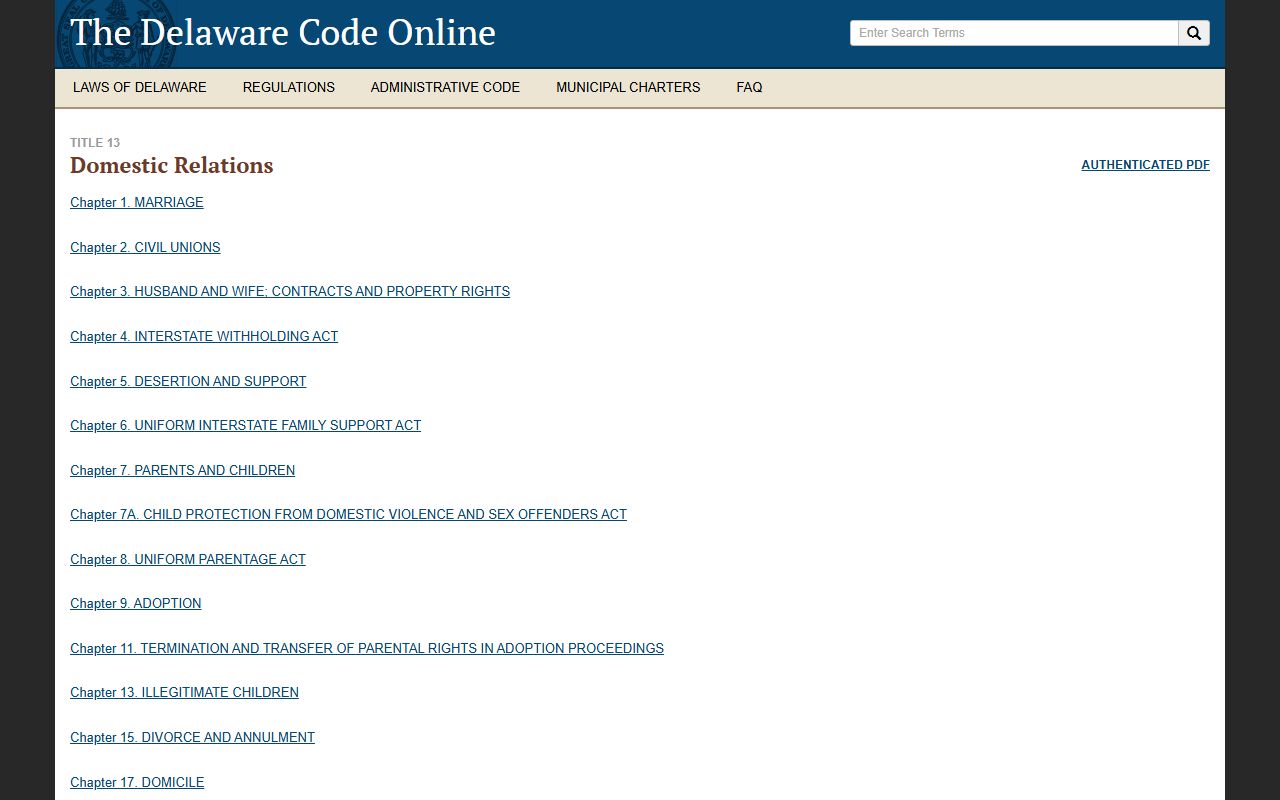
Title 13 of the Delaware Code carries many family-records rules tied to probate edges, like guardianship of minors, parentage, and adoption. Title 12 carries decedents' estates and fiduciary rules. Read both when an estate touches a minor heir or an adopted child.
Probate Workflow in New Castle County
The probate path follows a steady set of steps. Some estates close fast. Some take a year or more. Small estates with one heir and clean assets move quickest. Estates with a house, several heirs, or a missing will take longer.
- Confirm New Castle County is the right place to file. Use the decedent's home county or the county where Delaware property sits.
- Gather the death certificate, the original will if any, asset details, and heir contact information.
- File the petition at the Register of Wills and qualify as personal representative.
- Get short certificates so banks and title firms will release assets to the estate.
- File the inventory by the deadline set in the rules.
- Give creditor notice when required, then handle debts and claims.
- File the accounting that shows what came in and what went out.
- Pay heirs after the office approves the final accounting.
- Close the estate with the final filings.
Common reasons estates stall: a missing original will, a fight among heirs, a real-estate sale, unknown creditors, out-of-state property, tax issues, minor heirs, and missed inventory or accounting deadlines.
Other Clerk and Records Offices
The Register of Wills covers probate. Other New Castle County offices cover other records. Picking the right office saves time and trips. The list below points to the offices most often confused with the Register of Wills.
- Prothonotary for Superior Court civil cases, judgments, and liens.
- Clerk of the Peace for marriage licenses.
- Recorder of Deeds for deeds, mortgages, and other land records.
- Family Court for divorce, custody, support, and PFA orders.
- Delaware FOIA portal for state and county agency records that fall outside court files.