
How to Search New Castle County Court Records
The main public search tool is Delaware CourtConnect, the State of Delaware Courts Judicial Case Database. It covers civil dockets, judgments, liens, and case-type lookups for Superior Court, the Court of Common Pleas, and Justice of the Peace cases. Family Court matters and many sealed files are not on it. The system is run by the Delaware Judiciary and is free to use. It does not produce certified copies. For those, contact the clerk at the court that holds the file.
Before you start, gather the basics. A full name or business name is the minimum. A case ID is best when you have one. Sample IDs look like N21C-08-063 for Superior Court civil cases. Filing-date ranges help narrow common names. You must read and accept the CourtConnect disclaimer before any search runs. The disclaimer warns that the data is "as is" and that the Civil Docket Report is not for official use.
Lookups follow the same basic flow whether the case is from a few months ago or a few years back. The site supports phonetic and partial last-name matches when spelling is unsure. Common names will return long lists, so add a first name, middle name, or date range. A docket report search needs an exact case ID. The steps below walk through a standard New Castle County court records search.
- Open the CourtConnect home and pick a search path: name and case type, judgment search, or docket report.
- Read and accept the public-access disclaimer to reach the search form.
- For a name lookup, type the last name or business name on the person/business search page. Add a first name and case-type filter to cut down hits.
- For a known case, switch to the docket report search and type the exact case ID in the DD-MON-YYYY format used by the system.
- Review the results list, click into a case for parties, events, and docket entries, then contact the proper clerk if you need a certified or stamped copy.
A second screen on the portal handles docket reports by exact case ID, shown in the screenshot from CourtConnect docket report search.
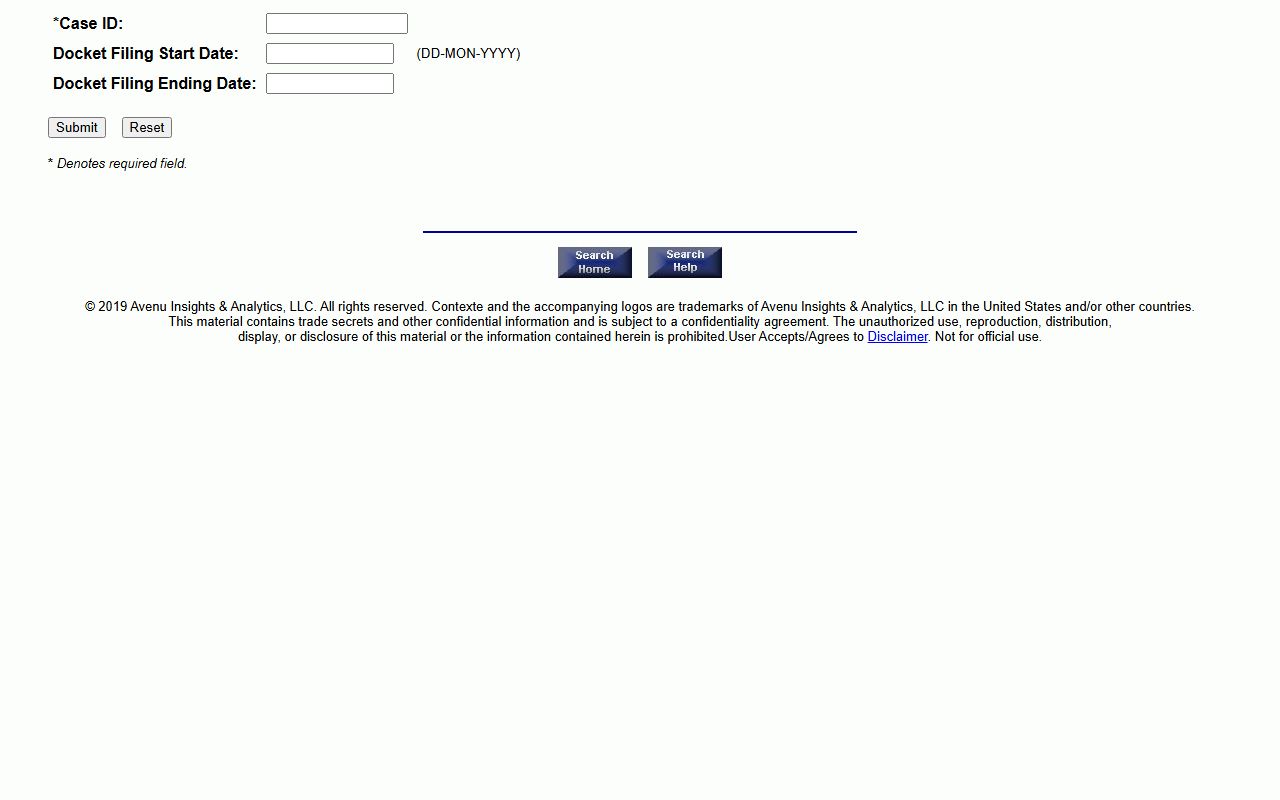
The docket report path is the fastest route when the case ID is in hand, and it returns the full event list for that one case.
New Castle County Court Records Search Fields
The CourtConnect person-and-case-type search form has a small set of fields. Only one is truly required. The last-name or business-name field is marked with an asterisk. Everything else helps narrow the result list. The same form is used for a quick name lookup, a deep records pull, or a judgment search. Below is a guide for prefacing the screenshot, which shows the live form as it appeared on a recent visit.
For more on the agency that runs the portal and the larger Delaware court structure, see the Superior Court page or the Delaware Courts main site.
The portal screen on a recent visit to CourtConnect person and business search showed the layout below.
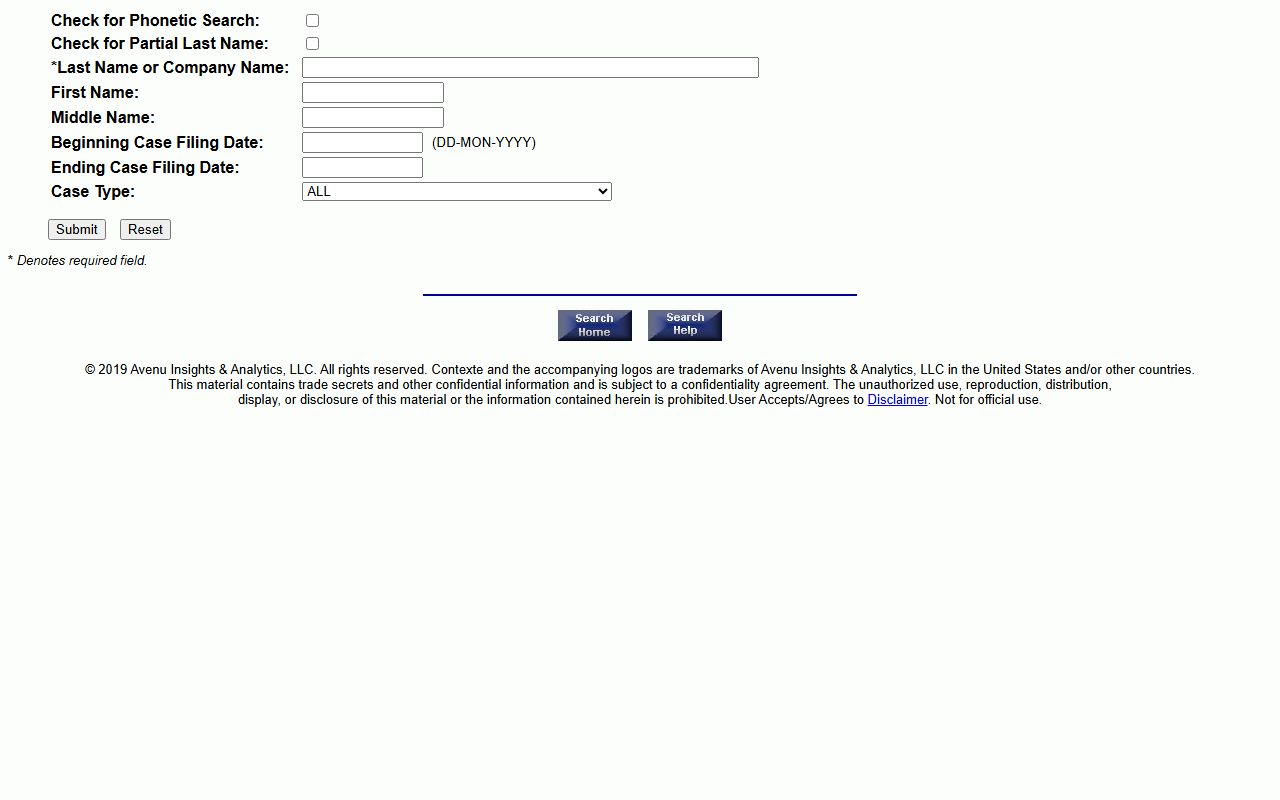
The same name fields, date range, and case-type dropdown appear at every entry point into the system, including the Superior Court civil index and the Court of Common Pleas civil index.
| Field Label | Type | Required | Notes / Format |
|---|---|---|---|
| Check for Phonetic Search | Checkbox | No | Aids name search when spelling is unsure |
| Check for Partial Last Name | Checkbox | No | Lets you search part of a last name |
| Last Name or Company Name | Text | Yes | Size 60, max length 60 |
| First Name | Text | No | Size 15, max length 15 |
| Middle Name | Text | No | Size 15, max length 15 |
| Beginning Case Filing Date | Date | No | Format DD-MON-YYYY |
| Ending Case Filing Date | Date | No | Format DD-MON-YYYY |
| Case Type | Dropdown | No | Default ALL; includes civil actions, JP debt, judgments, liens, foreclosure, defamation, asbestos, and more |
Types of New Castle County Court Records
The state court system in Delaware is unified, so a New Castle County file may live in one of several courts. The right court depends on the type of case, the amount of money in dispute, and the people involved. Civil records cover suits between private parties and many appeals from agencies. Criminal records start at arrest and travel up through the courts based on charge level. Family records hold divorce, custody, child support, juvenile, and protection-from-abuse cases. Probate records sit with the Register of Wills rather than with the trial-court clerks.
Each court keeps its own records. The Superior Court is the main trial court for major civil cases and felonies. The Court of Common Pleas handles misdemeanors, preliminary hearings, and many civil claims within statutory limits. The Family Court handles domestic matters. The Justice of the Peace Court hears small claims, landlord-tenant, debt, traffic, and lower-level cases. The Court of Chancery hears equity matters, including many trust, guardianship, and corporate cases tied to Delaware's status as a business-incorporation hub.
- Civil records: complaints, answers, motions, orders, judgments, liens, agency appeals, and case events from Superior Court and Common Pleas.
- Criminal records: charging documents, indictments, pleas, bail orders, sentencing, capias, and disposition entries.
- Family records: divorce, custody, support, abuse-and-neglect, juvenile delinquency, and protection-from-abuse files, many of them restricted.
- Traffic records: citation files for moving violations and lower offenses, often handled at Justice of the Peace Court.
- Probate and estate files: wills, inventories, accountings, and short certificates kept by the Register of Wills.
- Judgments and liens: money judgments and recorded liens searchable through CourtConnect's judgment path.
What New Castle County Court Records Show
A docket report on CourtConnect lays out the basics of a case in plain blocks. The header shows the case ID, caption, filing date, type, and status. Below that comes the list of parties, the list of attorneys, the event schedule, and the docket entries. Many filings will not be downloadable from the public view. Sensitive items are held back or redacted. A small sample, US Dominion, Inc. v. Newsmax Media, Inc., shows what a real Superior Court docket entry looks like.
The screenshot below was taken from that live case file.
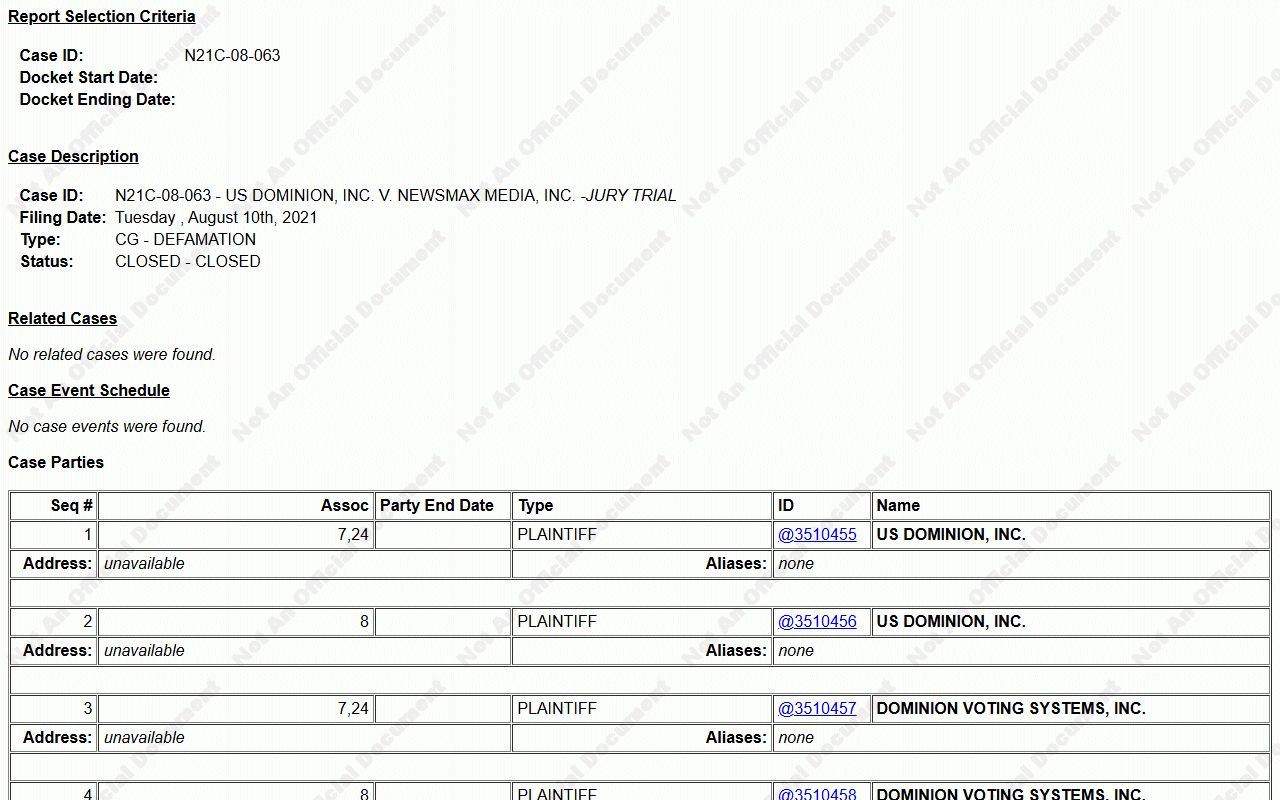
The same field set appears for most Superior Court civil dockets, with section headers reading Case Description, Case Parties, Case Event Schedule, and so on. The two-column table below maps the most common fields to what they actually show.
| Field | What It Shows |
|---|---|
| Case Number | Case ID in a county/year/case-type/sequence format such as N21C-08-063 for New Castle Superior Court civil cases |
| Filing Date | The date the case or item was filed, in full weekday and month form |
| Parties | Plaintiff, defendant, petitioner, respondent, attorneys, and any commissioner; some addresses may be marked unavailable |
| Case Type | Code plus text, such as CG - DEFAMATION or 61 - JP LANDLORD TENANT |
| Status | Open, closed, disposed, transferred, stayed, sealed, or another code |
| Event Schedule | Hearing dates, times, and event types when set |
| Docket Entries | Filings, motions, notices, orders, judgments, writs, returns of service, and appeals in date order |
| Disposition | Final outcome of the case or a specific charge |
| Aliases / Redactions | Section that may list none; private addresses, Social Security numbers, and minor names are not shown |
Public Access Framework for New Castle County Court Records
Public-record access in Delaware starts with the state Freedom of Information Act in Title 29, Chapter 100. The policy statement at 29 Del. C. § 10001 says citizens shall have reasonable access to public records and meetings of public bodies. Section 10002 defines a public record and lists exclusions. Section 10003 sets the right to examine and copy records. Section 10003B allows reasonable fees for copying and staff time. Court records have their own added layer: court rules, judicial orders, and statutes such as 11 Del. C. §§ 4372 to 4374 on expungement also control what stays public.
Anyone can search the public docket. No ID is needed to use CourtConnect. Requesters who need certified copies or full file inspection should contact the clerk for the court that holds the file. The Prothonotary office is the civil clerk for Superior Court. Fees are set by the Delaware Courts fee schedule for each division and may include search fees, plain copy fees, and certified copy fees. The Delaware Department of Justice handles some FOIA disputes for agency records, but court-record denials usually run through clerk contact, motion practice, or an order from the presiding judge.
Note: CourtConnect data is informational only and the Civil Docket Report is not for official use; certified copies must come from the proper court clerk.
Records That Are Sealed or Confidential in New Castle County
Not every court file is open. Juvenile records, adoption files, and many Family Court matters are restricted. Mental-health and involuntary-commitment records are protected because they hold medical data. Grand-jury proceedings stay secret, though the resulting indictment may become public after filing. Victim addresses, Social Security numbers, financial account numbers, dates of birth, and minor names should be redacted before any file is released. Trade-secret and confidential business material may also be filed under protective order, which is common in Chancery cases. Search warrants are usually not public until executed and may stay sealed longer.
Expungement is the most common way criminal records leave public access. Delaware has both mandatory and discretionary paths under 11 Del. C. §§ 4372 and 4373, and § 4374 spells out the effect after the court grants relief. A petitioner pulls criminal-history information, checks eligibility, files in the proper process, and pays any required fee unless waived. Sealing in civil or family matters usually needs a motion, a hearing, and an order from the judge. Unsealing follows the same general path in reverse. Court rules on dissemination of criminal history at 11 Del. C. § 8513 govern background-check disclosure separately from court dockets.
In-Person Court Record Requests
For walk-in record requests, the main building is the Leonard L. Williams Justice Center in downtown Wilmington. The same building houses Superior Court, the Court of Chancery, the Court of Common Pleas, and Family Court for New Castle County. Visitors should bring a photo ID, the case ID if known, and any payment for copy fees. Expect bag checks and metal-detector screening at the door. Probate work runs out of a different county building near the Wilmington government center.
Leonard L. Williams Justice Center
500 North King Street
Wilmington, DE 19801
See division contacts
Court business hours